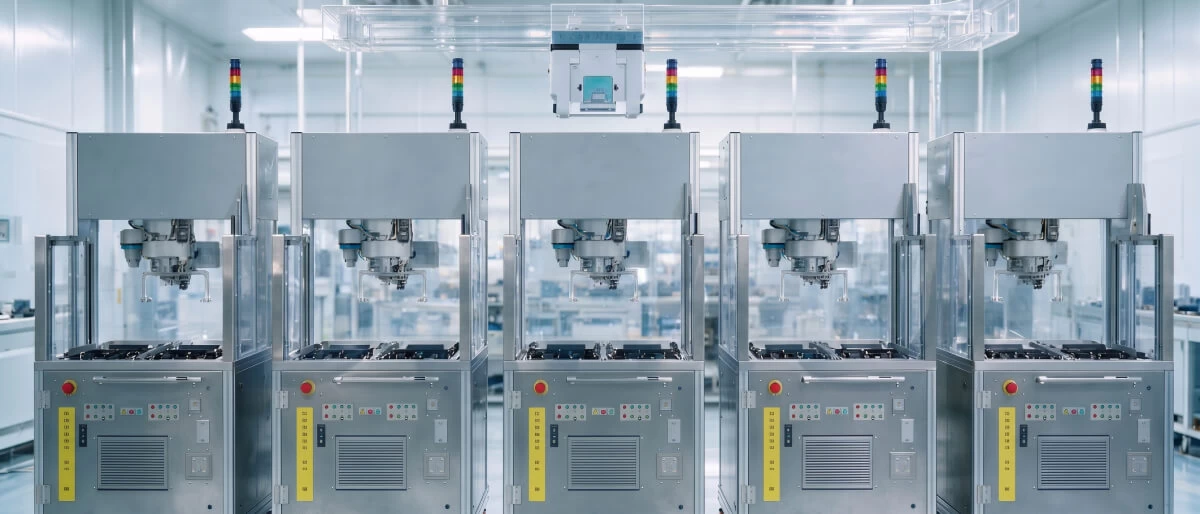
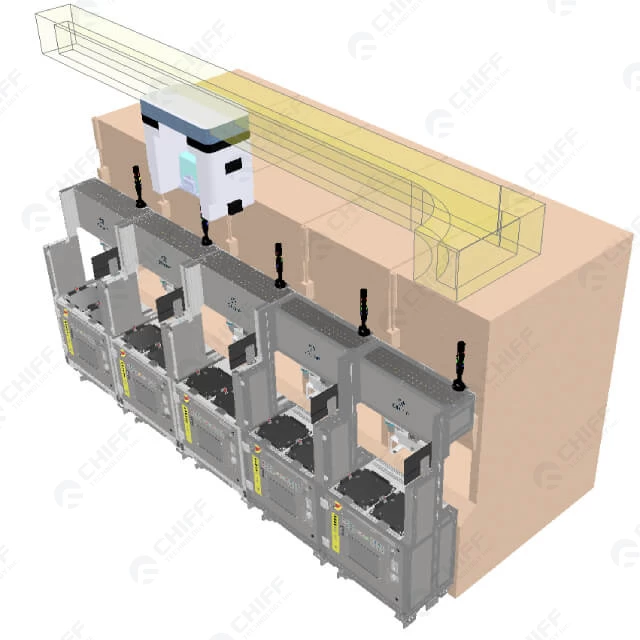
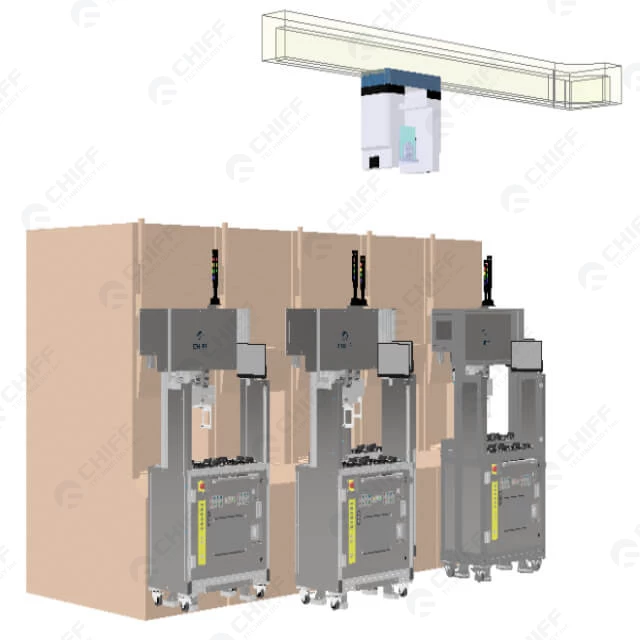
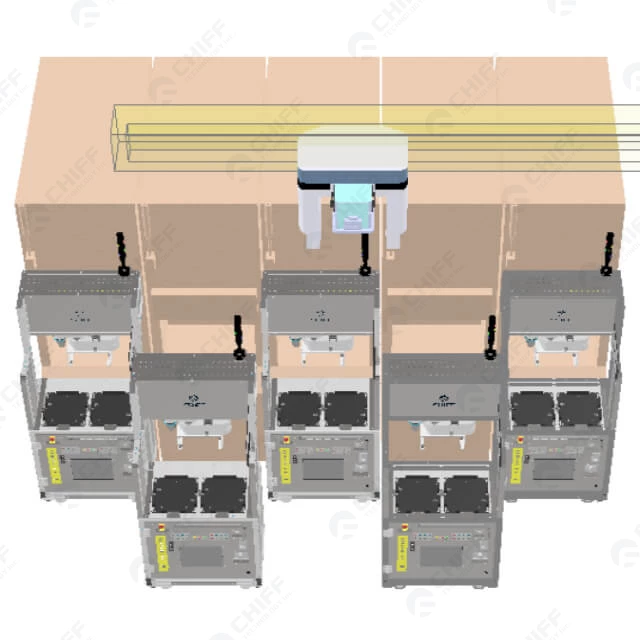
CR-ITS is a modular automated transfer system engineered specifically for Front-End-of-Line (FEOL) and Middle-End-of-Line (MEOL) processes in 8-inch semiconductor fabs. Seamlessly bridging Overhead Hoist Transport (OHT) systems with non-inline process equipment such as diffusion furnaces and wet benches, it replaces manual handling with fully automated carrier transfer. Integrated with Buffer Ports to absorb takt time fluctuations and available in flexible configurations such as 2-port and 3-port layouts, CR-ITS establishes a streamlined, high-efficiency OHT–CR-ITS–process tool automated transport workflow.
Common Material Handling Bottlenecks in Automated Fabs
Fabs often face these challenges when connecting existing tools to automated handling systems. They guide how CHiFF designs its transfer and exchange equipment.
Insufficient Buffering at the Tool Interface
Existing process tools in 200 mm fabs may lack a direct OHT interface, leaving operators to transfer wafer carriers by hand.
Low Tool Utilization
Frequent manual transfers and long waits slow material flow and reduce tool utilization.
Long Restart Times After Relocation
Fixed installations take longer to return to service after maintenance or relocation, increasing downtime.
Limited Fab Space
Tight layouts in existing fabs can require extensive equipment rearrangement.
Integration Across Process Stages
Different process stages and equipment types can have incompatible interfaces.
How CHiFF Addresses These Challenges
Quick Installation and Easy Servicing
Quick-release leveling feet and signal connectors make the unit faster to move and return to service.
Quick-release modular assemblies reduce maintenance time and cost.
Flexible Configuration and Customization
Configurable Buffer Port Count
2-port configuration: For a single process tool. The station receives the carrier from OHT and transfers it through the buffer to the tool.
3-port configuration: For adjacent tools serving multiple process stages or production lines with shorter cycle times.
4-port configuration: For high-throughput equipment that needs additional buffer capacity for waiting carriers.
Robot arm and module options: Arm travel and payload can be configured for the application. The modular design integrates with a variety of process tools and simplifies changeovers.
Broad Tool Compatibility and Automated Handoffs
Automated interfaces accommodate a range of front- and mid-stage process tools.
Supported tools include tube furnaces, wet benches, Surfscan wafer inspection systems, mask aligners, and wafer scrubbers.
Operational Benefits
01
Improve tool utilization by reducing idle time while tools wait for carriers.
02
Reduce manual transfers and wait time, lowering the risk of wafer damage during handling.
03
Improve carrier transfer efficiency and overall system reliability.
04
Quick-release modules shorten maintenance and equipment relocation time.